Chosen Gravity

I want to share a quick note about the book Chosen Gravity: Meaning After Work (download links at the end of this post).

I didn’t write this book. I do, however, have permission to share it freely with visitors to this site. Like most interesting things, it’s not something I agree with entirely – but it contains enough insight to be worth spending some time with. If nothing else, its citations alone can lead you toward some genuinely helpful resources.

The book is practical, but also a little unsettling. It frames modern life like a physics problem: as the external gravity of necessity (work, money, survival) weakens, you have to decide what gives your days weight – and then build it deliberately. It points to mastery (voluntary difficulty), connection (intentional human relationships), and independence (a varied set of personal identity sources) as the raw materials. At times it reads like a manifesto, at others like a research paper. Throughout, it assumes AI ushers in an era of bounty beyond our current imagination (i.e. not resolving to doom by default) – and offers a clear admonition: don’t dissolve into the simulation. Be a real person on purpose.

Over the next year or two, I suspect some of its questions (and perhaps several of its claims) will only become more relevant. From time to time, I may write short posts that reference a passage or idea from the book – sometimes to build on it, sometimes to push back on it a bit.

There are two download options available: a PDF, or an EPUB format optimized for eReaders like the Kindle.

Enjoy.

Morality and Mathematics in Superintelligence

Lately, the conversation around AI has started to sound almost theological. Not in the sense of angels or miracles, but in how we talk about agency, responsibility, and the power to shape the future. This year, I wouldn’t be surprised if AI joins religion and politics as one of those hot-button topics at holiday meal tables.

I’ve recently read two new books that illustrate just how far apart the faiths of our time have drifted. In Superagency, Reid Hoffman imagines a world where intelligent systems amplify our collective good – a partnership between human intention and machine capability that can take us to great heights. In If Anyone Builds It, Everyone Dies, Eliezer Yudkowsky and Nate Soares take the opposite view, warning that superintelligence, left to its own optimization, would most likely end us outright. Between those visions stretches a spectrum of hope and fear – not just a policy debate, but a question of who we trust to shape the future (and what kind of future we really want to build).

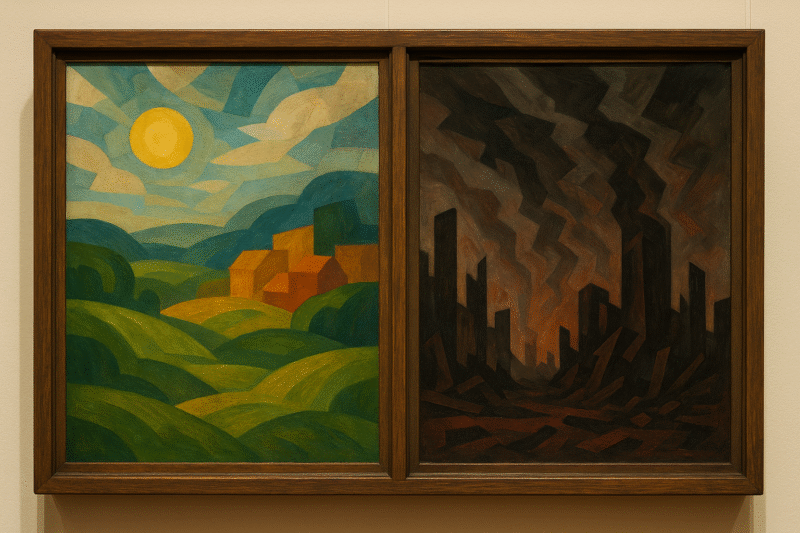
What form do we imagine tomorrow will take – light, shadow, or something in between?

The question beneath it all is simple but ancient: does intelligence naturally aim at good, or can it grow endlessly without moral progress? We can already see that reason leads to technical understanding – train a powerful model, and it gets better at math, physics, and other verifiable things. But can we trust that values will converge too, or might we create something so brilliant and strange that we can’t even recognize what it’s become?

Continue reading “Morality and Mathematics in Superintelligence”

Fasting and Rats in the Cellar

For a long time people genuinely believed the world made its own creatures – rats from rags and straw in a damp corner, flies from meat left to rot in the heat. It was a tidy explanation that many people were content to accept for centuries. While we don’t believe in spontaneous generation when it comes to the physical world anymore, we still reach for psychological or spiritual versions of that story when the day is thin on sleep or food or patience – as if moods condense from the air, as if our behavior just happens to us. Maybe some of it does, but probably not all of it. Either way, it’s worth looking a little closer at what grows in the dark and why we let it.

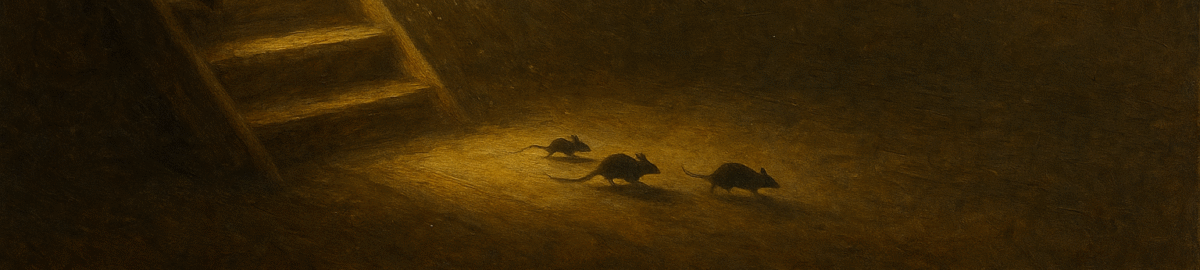
When you pull a cord and a light bulb snaps on in a dark cellar, you don’t create rats. You reveal them. C. S. Lewis used that picture to talk about character under pressure – what rushes out before we can compose ourselves. I think of it often, because one of my most common defenses after a sharp word is, “you caught me off guard.” Suddenness does make a difference in how we experience things. Our biology does, too – hunger, fatigue, pushing ourselves to our limits – it all changes how we see the world. But the light didn’t invent the rats in the cellar. It only showed them. A slower, “prepared” entrance might merely have let them scurry back into the dark.

Continue reading “Fasting and Rats in the Cellar”

Hello world!

Just testing out the blog – howdy!

public class InquiringLife {
    public static void main(String[] args) {
        Thought thought = new Thought("Hello, World");
        thought.contemplate();
    }
}

class Thought {
    private final String message;

    public Thought(String message) {
        this.message = message;
    }

    public void contemplate() {
        // TODO: build out observation, reflection, & integration functionality
    }
}