Individuation: Life as the Forge of Selfhood

“This signature on each soul,” writes C. S. Lewis, “may be a product of heredity and environment, but that only means that heredity and environment are among the instruments whereby God creates a soul.

I’ve been thinking about that quote a lot lately – especially in the age of AI. Odd as it sounds, it’s made me notice how little control I’ve actually had over becoming who I am. I like to imagine I’ve been discerning – that my choices have shaped me. But in truth, I didn’t build myself from scratch. Perhaps, like an AI model in training, I’ve just been formed by countless inputs: my upbringing, the examples I absorbed from culture, media, and literature, and the assumptions I inherited before I was even old enough to question them.

I didn’t pick my parents. Or the town I grew up in. I didn’t choose the way my brain is wired to handle stress, or the way my body responds when I’m short on sleep. Even the things I love – music, books, technology – most of those didn’t come from a carefully reasoned choice. They just were interesting to me, in a way I didn’t fully understand. They felt like discoveries more than decisions.
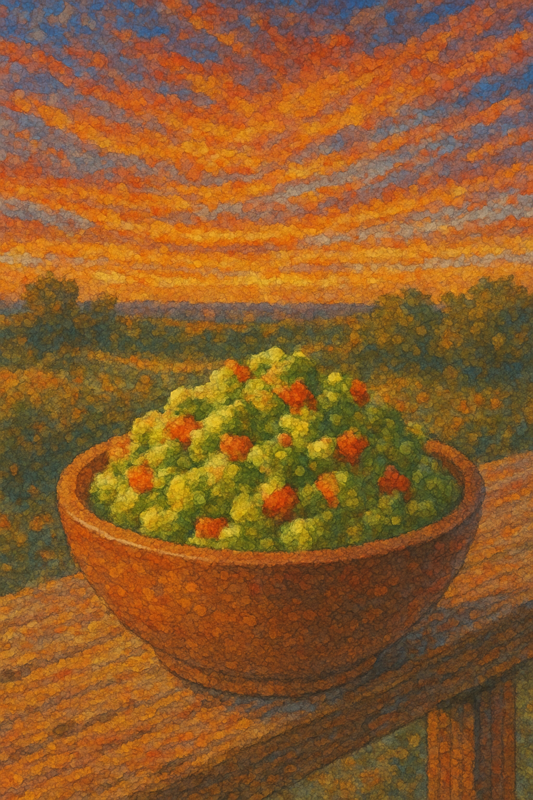
I could go for some fresh guacamole right now.

I don’t mean to say I’ve had no role in shaping who I’ve become. When I was younger, I didn’t like guacamole – but I wanted to be someone who did (why I wanted that is another layer of mystery, however). So I kept trying it, bit by bit, until eventually it clicked. Now I love it; it’s one of my favorite foods. That was one of those somewhat rare times when I felt like I rewired something on purpose. But even with moments like that, when I step back and look at the shape of my life, most of it feels more like an unfolding than a construction project. Like I’ve been gradually getting to know someone – me – who was already partly shaped by forces I never got to vote on. Maybe that’s determinism. Maybe it’s divine guidance. Maybe it’s some strange mix of both.

Continue reading “Individuation: Life as the Forge of Selfhood”
Infinity: Into the Endless Sea

There are more real numbers between zero and one than there are atoms in the entire known universe – and somehow, that’s only the beginning. Infinity isn’t just big. It stretches our ability to understand the fabric of space and time. It unsettles philosophers, challenges scientists, and even makes its way into video games.

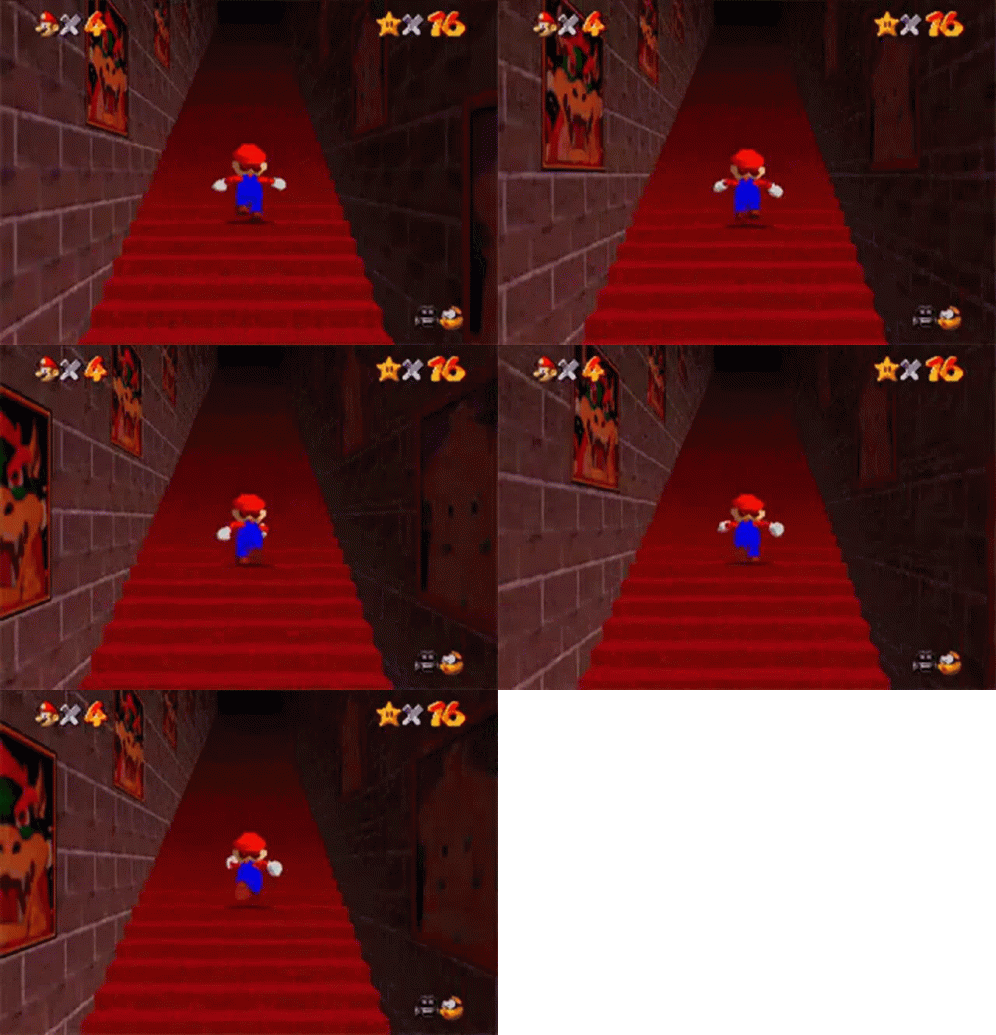
Infinity first caught my attention when I was a kid. I was entranced by the never-ending staircase in Super Mario 64, where no matter how far you ran, you didn’t get any closer to the top unless you had reached a certain milestone in the game.

No matter how far you run, you never reach the top – and the music never stops climbing either. This looping hallway was my first encounter with the Shepard Tone: a sound that seems to rise forever. A staircase and a song, both climbing endlessly into the infinite.

I didn’t know much about math or philosophy back then (to be fair, I still don’t know that much), but something about it stuck with me. It made me start to question what people meant when they talked about things like eternity, or when I heard in Sunday school that God was “infinite.” Was that just a fancy way of saying “very big,” or did it point to something real – something even more mysterious and unending than that staircase?

As I got older, I noticed most people didn’t like to think much about infinity. It was easy to brush off, as if it was just a silly thought experiment and not something worth thinking about. But I also started to sense a kind of unease beneath the dismissal. When I asked questions or tried to have discussions about infinity, people would usually shift the conversation or laugh it off, like the topic made them uncomfortable. And I get it – because when you start to really consider what infinity implies, not just as an idea but as a possible structure behind our reality, it blurs the lines between what we know, what we believe, and what we can’t explain.

That’s what this post is about: a journey into the idea of infinity – not primarily to make an effort at explaining it, but to explore how it shapes our view of existence. We’ll begin with a brief look at how humans across time have wrestled with the infinite, from ancient philosophers and theologians to modern mathematicians and cosmologists. And then, we’ll step into deeper waters.

Continue reading “Infinity: Into the Endless Sea”

Poetry Without a Poet

Anytime I encounter art – whether it be poetry, music, a novel, etc. – I like to try to understand the intent of the artist. They carefully crafted this work, so I should put forth the effort to receive it as they intended, right? While I still think that is a valuable exercise, it may also be that much of the experienced beauty in art isn’t created solely by the artist – not all of it deliberately, at least. C.S. Lewis captured this idea when he wrote the following in The Personal Heresy:

Continue reading “Poetry Without a Poet”